CiNEMERCATOR - Federico Fellini Nights of Cabiria 1957
Filmlover,
Merthe Voorhoeve,
Andreas van Riet,
Maaike Hasselaar
& Elisabeth van Vliet,
each are programming 1 precious film per month. That's 4 precious films per month!
CiNEMERCATOR
doors open 19:00
start 20:00
ticket 3€
1-4
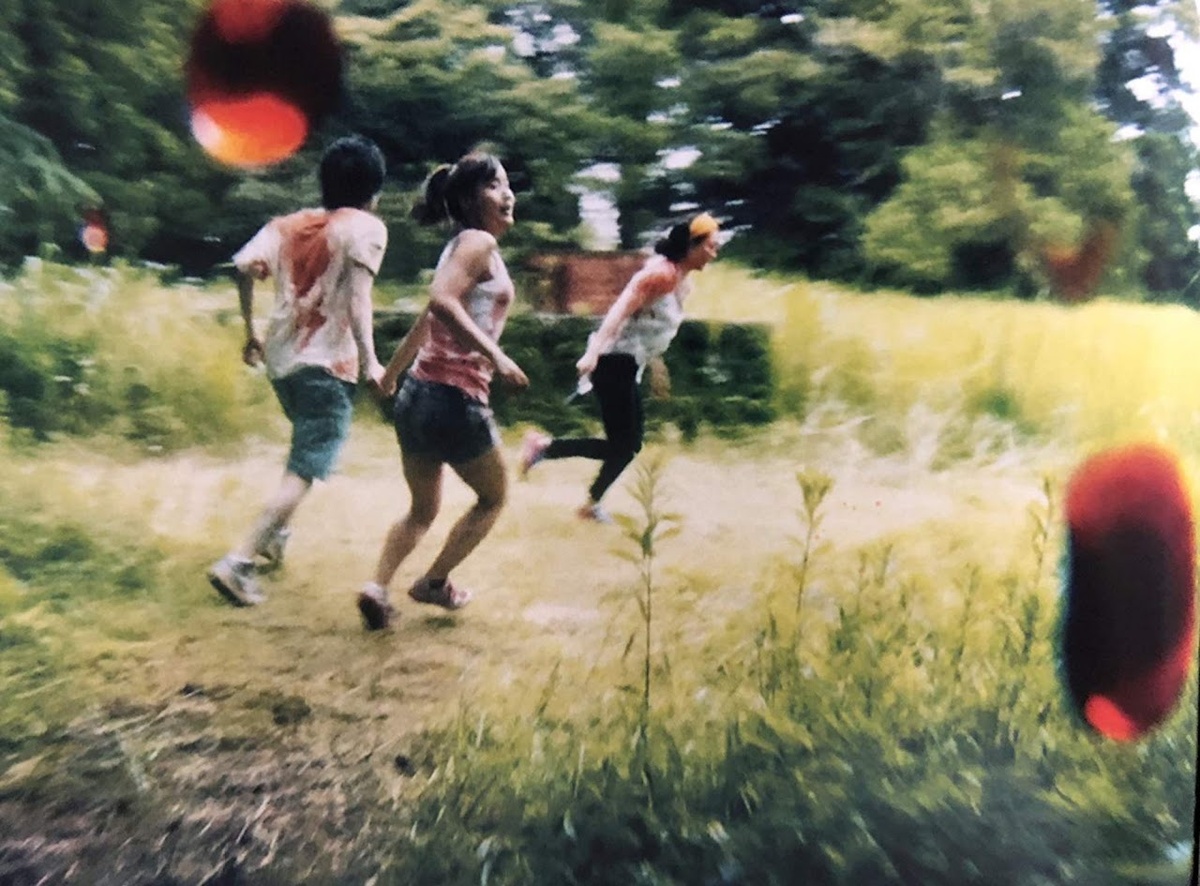
Ryoichi Wada One Cut of the Dead 2017
One Cut of the Dead, directed by Shinichirō Ueda, begins with what appears to be a scrappy, low-budget zombie film shot in a single continuous take. A small crew is filming in an abandoned facility when real zombies seem to appear. The director, more interested in capturing authenticity than safety, pushes the actors to keep going as chaos unfolds.
For a while, it plays exactly like that: messy, uneven, and slightly absurd. But the film then pulls back and reveals what’s actually behind this production, reframing everything we’ve seen. What first looked like incompetence becomes part of a tightly organized effort to pull off a live, one-take broadcast under increasingly difficult circumstances.
Ueda structures the film so that each repetition adds clarity. Scenes return from new angles, small details gain purpose and the apparent disorder resolves into a coordinated, collective effort. The focus shifts from zombies to the people making the film, their improvisation, persistence and problem-solving.
The result is a comedy about filmmaking disguised as a zombie moviel; less about horror than about the fragile, collaborative process of getting something made at all...
Andreas' choice
8-4
Federico Fellini Nights of Cabiria 1957
Few films in the work of Federico Fellini feel as suspended between worlds as Nights of Cabiria. It stands at a precise, almost fragile juncture in his career: after the breakthrough humanism of La Strada and Il Bidone, but before the baroque, self-reflexive spectacles of La Dolce Vita and 81⁄2. It is, in that sense, both culmination and threshold: the last of Fellini’s neorealist-adjacent works, and the first to hint at the inward, dreamlike cinema to come.
The film follows Cabiria, a Roman sex worker played with extraordinary tensile energy by Giulietta Masina. She is small, stubborn, indignant and perpetually exposed to humiliation. Men steal from her, deceive her, discard her. Yet the film does not unfold as a catalogue of suffering, instead, it becomes a study in persistence; less the endurance of hardship than the refusal to relinquish hope.
Formally, Fellini is already loosening his grip on strict realism. The Rome of the film is recognisable but porous, edged with theatricality. The episodic structure feels less like social observation than a procession of trials, almost allegorical in their repetition.
It is here that Fellini’s later cinema becomes visible. The world bends- slightly- toward the inner life of the character, reality is no longer fixed; it becomes permeable to feeling, to memory, to something like... grace?
Elisabeth's choice
15-4
Maren Ade TONI ERDMANN 2016
Some films announce their strangeness immediately; Toni Erdmann takes its time. It begins in a register that feels almost over-familiar: a father, Winfried, mildly anarchic, drifting through small practical jokes; a daughter, Ines, professionally composed, stationed deep inside the antiseptic machinery of corporate consultancy in Bucharest. The setup suggests a generational comedy, perhaps even a reconciliation narrative. What unfolds instead is something more elusive—less a story than a slow destabilisation.
Ines, played by Sandra Hüller with a precision that borders on self-erasure, is difficult to locate. Her fluency in systems- economic, linguistic, social- has come at the cost of a certain permeability. She moves through spaces as if insulated from them; gestures calibrated, expressions fractionally delayed. The question the film poses is not whether she is alienated, but whether alienation has become indistinguishable from competence.
What moves between father and daughter is difficult to name. It is not reconciliation, not recognition exactly. Something passes, occasionally, like a current that neither of them can hold. He insists, in his way, on the possibility of something else. She resists, or cannot quite follow. And yet, at times, they seem to meet in a what seems like a shared uncertainty.
What is remarkable is how little the film insists on meaning. Its coolness lies not in detachment, but in its refusal to overdetermine what we are seeing. The absurd does not redeem; it exposes. Ade avoids transcendence. She trusts duration, awkwardness, the intelligence of its viewer and leaves us- like its characters- negotiating the space between performance and presence, unsure where one ends and the other begins...
Merthes' choice
Do you want to receive our