(Dis)Trust at the Door: Implicit Bias in Nightlife
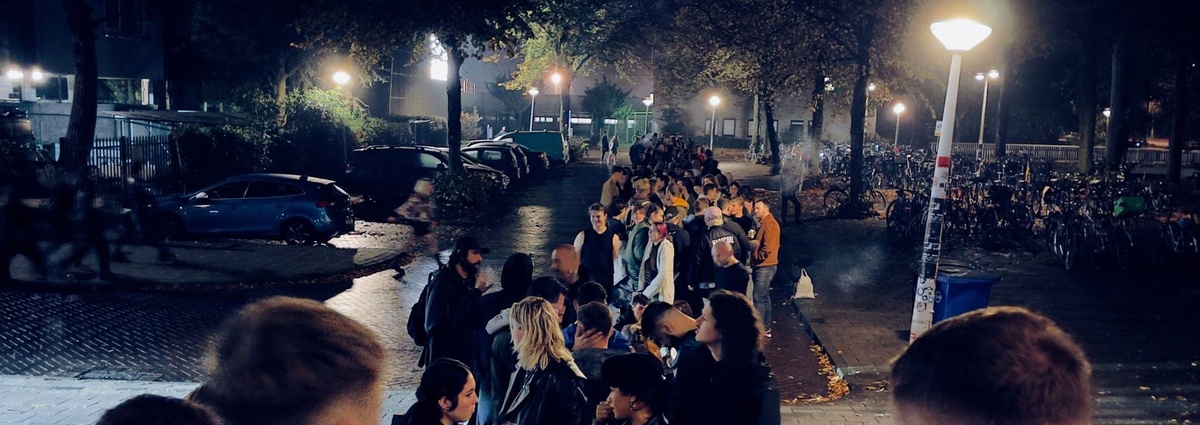
Nightlife venue door policies reflect different motives to exclude, many of which mirror and perpetuate societal prejudices. Screening often happens based on appearance, and can implicate a host of (implicit) biases. Some biases, the law seeks to shelter people from – for others, the law hasn’t caught up. During this panel and group discussion, we will examine the current modes of door screening in Amsterdam, their impacts on different marginalised groups, and ways venues may avoid relying on stereotypes. How are different bodies treated when trying to enter nightlife spaces? What methods of creating inclusive spaces can we imagine together?
In this programme Anna Joseph Founder Door Policy Project Youssef Mahmoud Community builder, door host, drag artist & political scientist Lanre Balogun Cultural accessibility researcher & writer Stella R. Portal Doorhost, corporate slave, and graduate student in gender and women’s studiesThis event is a collaboration between Door Policy Project and Werkgroep Validisme Amsterdam (Focus Group Ableism Amsterdam).
About the speakers
Alicia Hoost (she/her) calls herself culture creator. As a heritage professional she uses her lived experience as a disabled woman of global majority to help cultural organisations become more accessible. She is a founding member of Werkgroep Validisme Amsterdam (Focus Group Ableism Amsterdam). Werkgroep Validisme Amsterdam is founded in 2025 by people with disabilities to raise awareness about ableism in Amsterdam. They seek to build a stronger ground for the disabled community and create safe spaces for them to come together.
Stella R. Portal (she/her) has worked as a door host in Amsterdam for three years. Through firsthand experience at the threshold of nightlife spaces, and informed by her academic background in gender studies, Stella continuously reflects on how door policies actively negotiate with processes of exclusion, inclusion, safety, and community-building. Currently associated with Amore, NightGuides and TillaTec, she approaches door hosting as a critical praxis that requires constant negotiation of the ethics and tensions of deciding who gets to enter.
Anna Joseph (she/her) is a community organiser, legal researcher and anti-discrimination advocate. With a background in human rights, immigration law and gender justice, Anna worked as a lecturer and academic researcher on discrimination in goods and services before founding Door Policy Project in 2025. Door Policy Project promotes inclusivity in nightlife through education and advocacy, drawing on community insights and lived experiences of discrimination. It advocates for transparent, behaviour-based policies that reject judgements rooted in stereotypes. Anna is also communications chair of Erev Rav (an antizionist Jewish collective), a Vrankrijk volunteer, and a proud regular at de Trut.
Youssef Mahmoud (they/them) is a Cairo-born and Amsterdam-based community builder, door-host, drag-artist, and political scientist. Specialising in Public Policy and Governance during their Bachelors and in Gender and Sexuality in Political Science during their Masters. Next to being a door-host, they’re also the Community Manager at Club RAUM, where they aim at representing and platforming underrepresented subgroups within the queer community. Alongside their professional research which involves topics such as transgender healthcare policy, pink washing & homonationalism and queer safety during military interventions. In addition to that, their artistic essence and performance combines elements of their background in musical theatre mixed with clubkid-drag and punk, aiming at pushing the boundaries of identity, the body, sexuality and drag.
Lanre Balogun (he/him, they/them) is a cultural accessibility researcher and writer, passionate about urban life, equity, economic inclusion and challenging barriers to access.