CiNEMERCATOR - Pier Paolo Pasolini THEOREM 1968
Filmlover,
Merthe Voorhoeve,
Andreas van Riet,
Maaike Hasselaar
& Elisabeth van Vliet,
each are programming 1 precious film per month. That's 4 precious films per month!
CiNEMERCATOR
doors open 19:30
start 20:00
ticket 3€
18-2
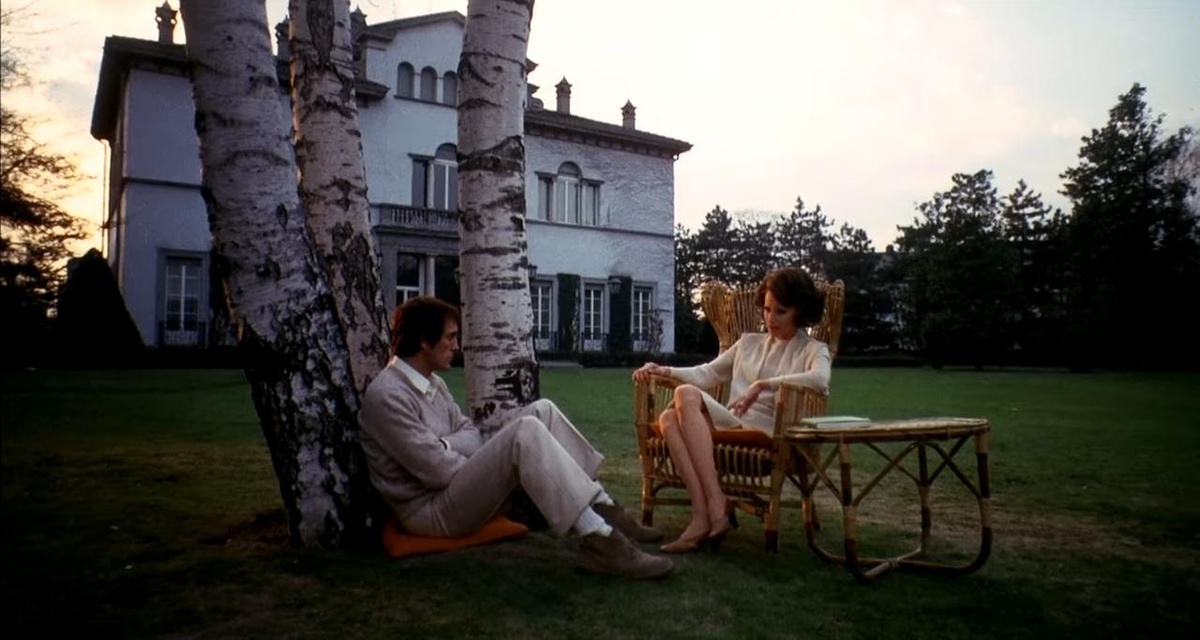
Pier Paolo Pasolini THEOREM 1968
Theorem,Teorema, directed by Pier Paolo Pasolini is a rigorously constructed film that uses narrative reduction as a critical method. Rather than developing characters psychologically, Pasolini organizes the film as a conceptual experiment.
The premise is deliberately schematic: an upper-class Milanese family is visited by a mysterious stranger who forms an intimate relationship with each family member before leaving as abruptly as he arrived. The film does not explain the visitor’s identity or motivation and this refusal of explanation is central to its structure; Pasolini frames the family less as individuals than as social functions. Father, mother, son, daughter, servant- each defined by their position within bourgeois ideology. The visitor’s presence disrupts these roles, exposing their internal instability.
Teorema resists interpretation as allegory with fixed meanings. While religious, sexual and political readings are clearly invited, Pasolini avoids synthesis. The film operates instead as a demonstration: when bourgeois order is confronted with an absolute other, it cannot transform, only collapse...
Andreas' choice
21-2
Mike Echols Who's afraid of Virginia Woolf? 1966
This film is intense, uncomfortable at times, but never indulgent. It is rigorous in its examination of marriage, ego and vulnerability. A turning point in American cinema; adult in subject, disciplined in craft and anchored by performances (Elizabeth Taylor, Richard Burton) that feel dangerously alive.
Released in 1966, Who’s Afraid of Virginia Woolf? arrived at a moment when American cinema was beginning to crack open. The old studio system was weakening, censorship standards were loosening and films were starting to confront adulthood emotionally and morally without disguise. In that climate, this adaptation of Edward Albee’s theater play felt bracing. It did not soften its language or its cruelty. It trusted the audience to sit with discomfort.
Directed by Mike Nichols in his first feature film, the movie remains remarkably controlled. Nichols resists theatrical stiffness while preserving the intensity of the stage work. The camera moves with purpose, the claustrophobia of the single-night setting is not relieved but sharpened, the house becomes an arena.
What makes the film endure is its emotional honesty. Beneath the games and insults lies a meditation on the illusions people invent in order to survive disappointment. In 1966 that theme resonated with a society beginning to question its own myths- and it still resonates now...
Maaikes' choice
21-2
Gakuryû Ishii
Mirrored Mind (2004)
Electric Dragon 80000 Volt (2001)
Just like our first screening on January 9, 2025, we are once again showing a Japanese film. In fact, two. Both films are under one hour and serve as a perfect introduction to this important yet underrated filmmaker, whose work helped launch the Japanese cyberpunk movement (Akira, Ghost in the Shell) and has been cited as a major influence by several directors, including Tarantino.
Gakuryū Ishii returns to his punk roots with this short but powerful film about Dragon Eye Morrison, who undergoes electroshock therapy from childhood because of his aggressive behavior. Eventually, his body begins to conduct electricity itself, and he learns to channel his aggression through his guitar. The film is filled with striking black-and-white imagery and special effects, featuring music by the industrial noise-punk band MACH-1.67.
After his punk films of the 1980s, Ishii took a ten-year hiatus and returned with an entirely new style of supernatural thrillers and metaphysical/transcendental films. These later works are less plot-driven and focus more on the inner world, in contrast to his earlier explosive films. This experimental piece follows an actress undergoing an existential crisis, dissociating from a reality that has become unrecognizable to her (we previously recommended the film in connection with our screening of David Lynch’s Inland Empire).
Andreas' choice
Do you want to receive our