CiNEMERCATOR - Paolo Sorrentino La Grande Bel lezza 2013
Filmlover,
Merthe Voorhoeve,
Andreas van Riet,
Maaike Hasselaar
& Elisabeth van Vliet,
each are programming 1 precious film per month. That's 4 precious films per month!
CiNEMERCATOR
doors open 19:00
start 20:00
ticket 3€
25-3
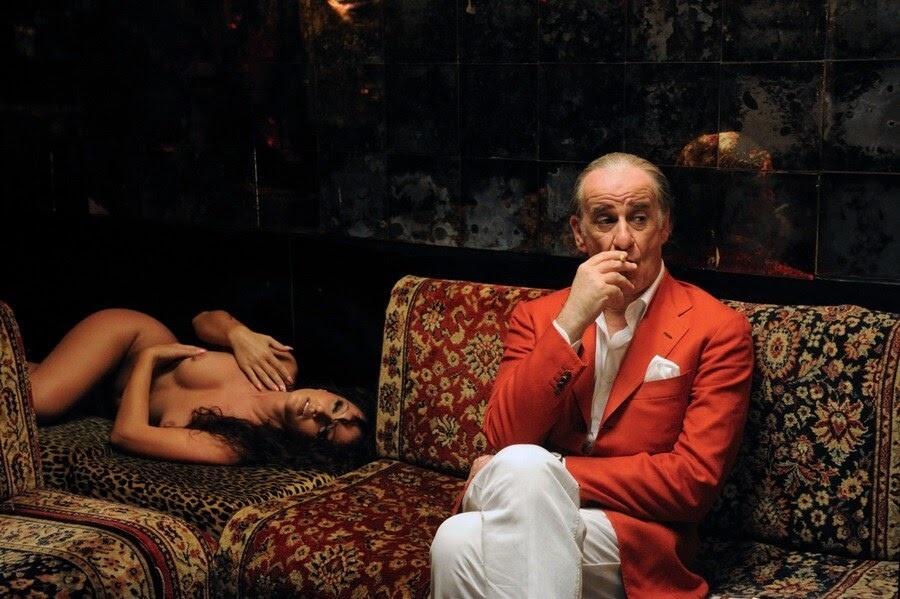
Paolo Sorrentino La Grande Bellezza 2013
La Grande Bellezza, directed by Paolo Sorrentino and starring Toni Servillo, is a lavish, amused and faintly melancholic drift through Rome after the party has gone on too long.
Servillo plays Jep Gambardella, a writer who achieved literary success early in life with a single celebrated novel. Decades later, he has become a polished fixture of Rome’s social scene: moving easily through rooftop parties, aristocratic apartments, performance art happenings and late-night strolls through the city’s monumental beauty. He is charming, observant and slightly detached, as if watching a long-running performance whose ending he already suspects.
Sorrentino fills the film with spectacle; ornate palaces, glittering fountains, surreal interludes and parties that stretch into the early hours. The camera moves restlessly through these spaces, lingering on faces, music and fragments of conversation. Rome itself becomes one of the film’s central presences: magnificent, excessive and quietly haunted by the weight of its past.
Often compared to the great Italian films of the 1960s, La Grande Bellezza mixes satire with genuine wistfulness. Its world is full of noise, spectacle and eccentric characters, yet beneath it runs a steady current of reflection about aging, memory and the strange persistence of beauty.
Elisabeth's choice
1-4
Ryoichi Wada One Cut of the Dead 2017
One Cut of the Dead, directed by Shinichirō Ueda, begins with what appears to be a scrappy, low-budget zombie film shot in a single continuous take. A small crew is filming in an abandoned facility when real zombies seem to appear. The director, more interested in capturing authenticity than safety, pushes the actors to keep going as chaos unfolds.
For a while, it plays exactly like that: messy, uneven, and slightly absurd. But the film then pulls back and reveals what’s actually behind this production, reframing everything we’ve seen. What first looked like incompetence becomes part of a tightly organized effort to pull off a live, one-take broadcast under increasingly difficult circumstances.
Ueda structures the film so that each repetition adds clarity. Scenes return from new angles, small details gain purpose and the apparent disorder resolves into a coordinated, collective effort. The focus shifts from zombies to the people making the film, their improvisation, persistence and problem-solving.
The result is a comedy about filmmaking disguised as a zombie moviel; less about horror than about the fragile, collaborative process of getting something made at all...
Andreas' choice
8-4
Federico Fellini Nights of Cabiria 1957
Few films in the work of Federico Fellini feel as suspended between worlds as Nights of Cabiria. It stands at a precise, almost fragile juncture in his career: after the breakthrough humanism of La Strada and Il Bidone, but before the baroque, self-reflexive spectacles of La Dolce Vita and 81⁄2. It is, in that sense, both culmination and threshold: the last of Fellini’s neorealist-adjacent works, and the first to hint at the inward, dreamlike cinema to come.
The film follows Cabiria, a Roman sex worker played with extraordinary tensile energy by Giulietta Masina. She is small, stubborn, indignant and perpetually exposed to humiliation. Men steal from her, deceive her, discard her. Yet the film does not unfold as a catalogue of suffering, instead, it becomes a study in persistence; less the endurance of hardship than the refusal to relinquish hope.
Formally, Fellini is already loosening his grip on strict realism. The Rome of the film is recognisable but porous, edged with theatricality. The episodic structure feels less like social observation than a procession of trials, almost allegorical in their repetition.
It is here that Fellini’s later cinema becomes visible. The world bends, slightly, toward the inner life of the character. Reality is no longer fixed; it becomes permeable to feeling, to memory, to something like grace?
Elisabeth's choice
Do you want to receive our