CiNEMERCATOR - John Waters HAIRSPRAY 1988
Filmlover,
Merthe Voorhoeve,
Andreas van Riet,
Maaike Hasselaar
& Elisabeth van Vliet,
each are programming 1 precious film per month. That's 4 precious films per month!
CiNEMERCATOR
doors open 19:00
start 20:00
ticket 3€
11-3
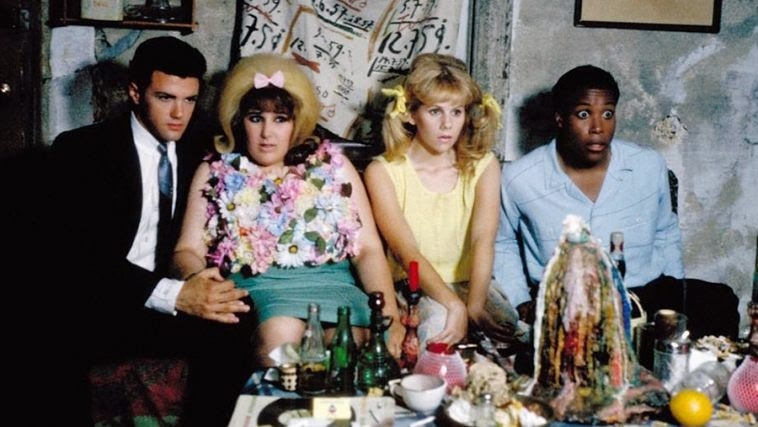
John Waters HAIRSPRAY 1988
If Hairspray were a person, it would burst into the room already mid-dance, glitter in its hair, convinced the party improves because it showed up.
Set in 1962 Baltimore, the film follows Tracy Turnblad, a teenager whose ambitions are gloriously specific: dance on a local TV show, defeat racial segregation, and keep her hair as high as municipal law allows. The plot moves like a jukebox that’s been kicked into overdrive. Songs spill out one after another, each brighter and cheekier than the last.
What makes the film such a delight is its shamelessness. It knows musicals are ridiculous and leans into it with a wink. Dresses spin like pinwheels, dance numbers erupt in supermarkets and detention halls, and the camera glides through choreography as if it too had swallowed a spoonful of sugar.
Yet beneath the bubblegum surface sits a sly heart. Hairspray smuggles the politics of integration and media spectacle into a story about teenagers who simply want to dance together. The film’s argument is disarmingly simple: prejudice looks especially foolish when surrounded by this much rhythm.
Maaikes' choice
15-3
Paolo Sorrentino La Grande Bellezza 2013
La Grande Bellezza, directed by Paolo Sorrentino and starring Toni Servillo, is a lavish, amused and faintly melancholic drift through Rome after the party has gone on too long.
Servillo plays Jep Gambardella, a writer who achieved literary success early in life with a single celebrated novel. Decades later, he has become a polished fixture of Rome’s social scene: moving easily through rooftop parties, aristocratic apartments, performance art happenings and late-night strolls through the city’s monumental beauty. He is charming, observant and slightly detached, as if watching a long-running performance whose ending he already suspects.
Sorrentino fills the film with spectacle; ornate palaces, glittering fountains, surreal interludes and parties that stretch into the early hours. The camera moves restlessly through these spaces, lingering on faces, music and fragments of conversation. Rome itself becomes one of the film’s central presences: magnificent, excessive and quietly haunted by the weight of its past.
Often compared to the great Italian films of the 1960s, La Grande Bellezza mixes satire with genuine wistfulness. Its world is full of noise, spectacle and eccentric characters, yet beneath it runs a steady current of reflection about aging, memory and the strange persistence of beauty.
Elisabeth's choice
Do you want to receive our