Wild Hedges: Waste/lands
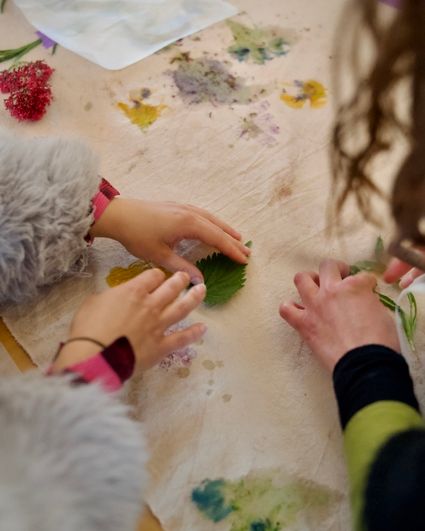
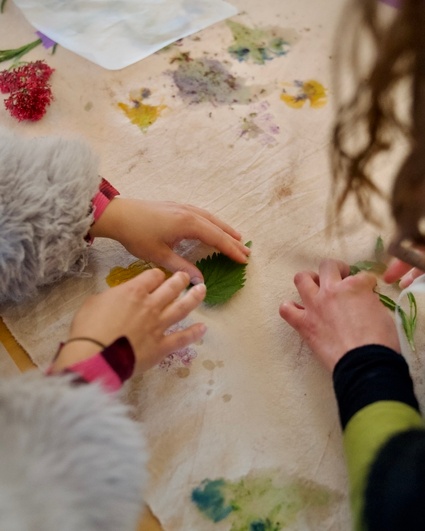
In conversation with Amsterdam Green Vision 2050, Wild Hedges: Waste/lands turns towards the plants growing in the cracks of Amsterdam’s Oosterdok. Through a site-specific textile installation, Al-Wah’at Collective traces how so-called “invasive” species and urban ecologies are shaped by histories of colonial trade, classification, and control.
The opening is followed by a panel conversation on the language around wastelands, the politics of green planning and counter-cartography practices.
Free Entrance – RSVP
About the project
Formed by Ailo Ribas, Gabriella Demczuk, and Areej Ashhab in 2022, Al-Wah’at is an artist-research collective committed to growing communal practices of care and repair in ecologies labelled “wastelands”. Their work seeks to counter colonial and anthropocentric narratives around arid lands and invasive species by engaging with a diversity of knowledge, be they local, folk, scientific, or more-than-human, to promote a deeper understanding of these ecologies, especially in light of climate change.
Their project Wild Hedges investigates the ecological and socio-political complexities of the prickly pear cactus and cochineal insect across multiple geographies and temporalities, including Palestine, Mexico, and Spain. Addressing colonial practices that perpetuate cycles of harm within human and more-than-human communities, Wild Hedges delves into the material possibilities of the cactus and the cochineal in weaving, dyeing, printing, and cooking, using mythology and rituals to reaffirm entanglement with the land amid enclosure and dispossession.
At Mediamatic, Wild Hedges: Waste/lands addresses urban repair through more-than-human growth within the city’s fractures. In conversation with Amsterdam's Green Vision 2050, this five-meter textile installation engages so-called "invasive" species not as targets for eradication, but as a “wild hedge”: entangled, adaptive growth rooting in disturbed soils amid a changing environment. Plants thriving in the concrete cracks of canal docks, along train tracks, and on abandoned plots in the Oosterdok—an area shaped by the colonial botanical trade of the Dutch East India Company—are collectively eco-printed, their pigments pounded directly into the fabric.
An embroidery layer is then woven through these prints with threads dyed from the same plants, utilizing small blocks of darning—a needle-weaving technique practiced by young Dutch women in the 17th and 18th centuries as part of learning textile repair. Following the organic logic of the eco-prints, embroidered warp threads act as bleeds extending the plant stains, while new block patterns are woven into these structures, emerging through and alongside the more-than-human growth rather than replacing it.

Al-Wah'at Collective الواحات group photo - credits: Al-Wah'at
With: Al-Wah'at Collective الواحاتExhibition opening & panel talk
The opening of Wild Hedges: Waste/lands will be followed by a panel conversation on urban ecologies, maintenance, water, and the politics of green planning.
With contributions from Linda Kopitz, Alaa Abu Asaad and Ameneh Solati the conversation will consider how cities imagine ecological futures, and what forms of life already grow within their cracks.
Panel participants
Linda Kopitz connects her professional experience as a Creative Director with her interdisciplinary academic work to explore the role of technology in everyday meaning-making. Currently working as a Lecturer in Cross-Media Culture at Vrije Universiteit Amsterdam, her research – situated between urban studies and media studies – focuses on the entanglement between real and virtual environments.
Alaa Abu Asad is an artist whose work engages with feral life forms, ecological language, and contested forms of belonging. His project The Dog Chased Its Tail to Bite It Off offers a point of departure for discussing the politics of so-called “invasive” species.
Ameneh Solati is a research-based artist and architect whose practice investigates the spatial manifestations of power and resistance. She leads a design studio at Design Academy Eindhoven and is an editor-at-large at Failed Architecture.
Al-Wah'at Collective الواحات artist-research collective committed to growing communal practices of care and repair in ecologies labelled “wastelands”.

Wild Hedges research presentation during HABITS -
Visitor Information
Date: Wednesday June 24th Time: 19:30 - 21:00 Language: English Location: Barn, Mediamatic Free Entrance – RSVP hereProgram:
19:00 - 19:30 Doors open and welcome drink 19:30 - 21:00 Presentation & panel talkFor questions, please send an email to program@mediamatic.nl.
Accessibility
If you have any questions about the accessibility of this event, please get in touch with mail@mediamatic.nl