Ledenconcert Heleen Hulst
Bach is an old friend to whom one keeps returning. The same applies to contemporary composers: Louis Andriessen wrote a remembrance on a sarabande by Bach, György Kurtág created a miniature based on the chorale melody Allein Gott in der Höh sei Ehr, and in the work of Amsterdam composer Reza Namavar you can hear how he uses the classical idiom and plays with expectations, disrupting them and letting them escalate.
And then there are also new young friends to be heard this afternoon. Recently, Gerard and I, as part of “A Tribute to Werner Herbers,” performed together with three students from the Conservatory of Amsterdam the intense quintet by Konstantin Regamey. He wrote this work in 1944, about that period he says: “All my projects, all my activities were completely interrupted by the war. It is well known that with the occupation of Poland all forms of culture were cleared away. The entire cultural life was brutally brought to a standstill, so that those who carried this cultural life suddenly found themselves unemployed. A completely surreal life emerged, in which the black market was king. A way out was offered by the coffee houses, where artists and intellectuals gathered and began to play tangos and foxtrots. Needless to say, most of these coffee houses became centers of resistance.”
In this “surreal” life, entirely focused on survival, Regamey also developed into a coffeehouse pianist and a man of the resistance, and devoted himself more than ever to composing. His main work from those years, the Quintet, can be regarded as a composition “pour la fin du temps” (“for the end of time”). The conviction that he would not survive the war, and the complete isolation felt in occupied Warsaw, gave Regamey a sense of total freedom. Everything was possible, everything equally meaningful and meaningless; all conceivable ideas could be entrusted to the manuscript paper. Any awareness of a consistent musical style or adaptation to any movement or tradition whatsoever seemed absurd in this situation. Hence, many diverse musical styles can be recognized in this work. It is a stunning score, ingeniously written and rich in detail. Listening to it feels like a journey through a highly varied landscape.
Programma:
J. S. Bach: from Organ Sonata No. 5 – Largo for violin and piano
Louis Andriessen: Remembering that Sarabande for viola and piano
J.S. Bach / György Kurtág: Allein Gott in der Höh’ sei Ehr for piano four hands
Reza Namavar – Geel bijvoorbeeld for violin and piano
Konstantin Regamey – Quintet for clarinet, bassoon, violin, cello and piano
Samuel Bragança Mendes de Freitas, clarinet
Nicolai Dahl Kjellberg, bassoon
Heleen Hulst, violin
Daniel Brandon, cello
Gerard Bouwhuis, piano
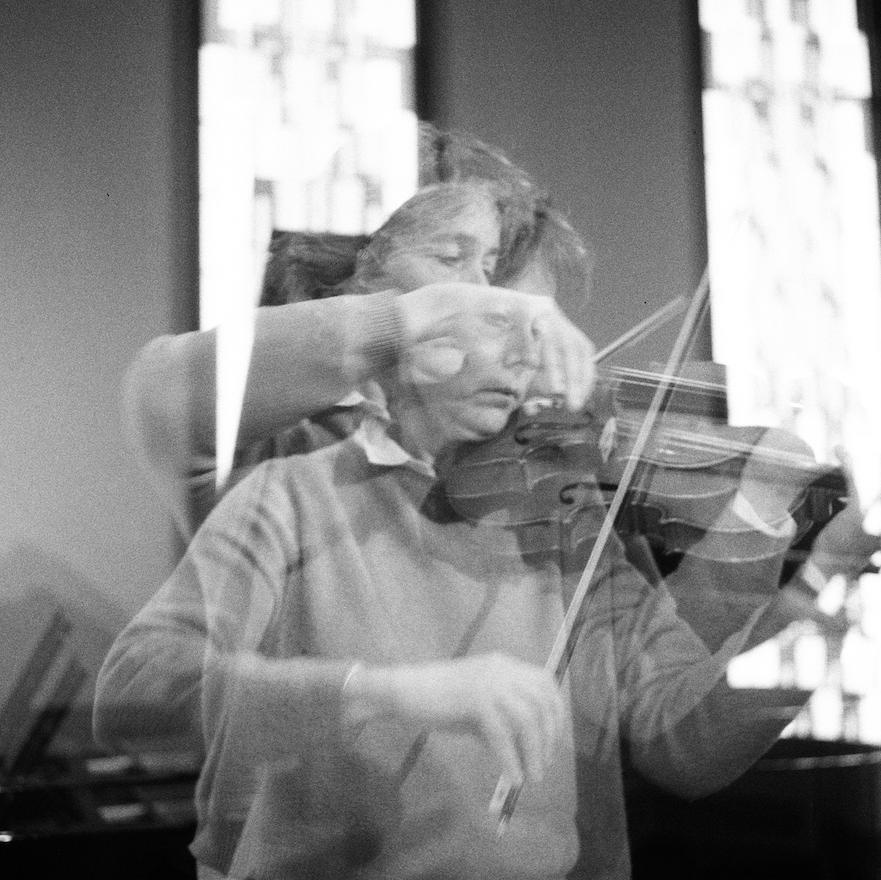
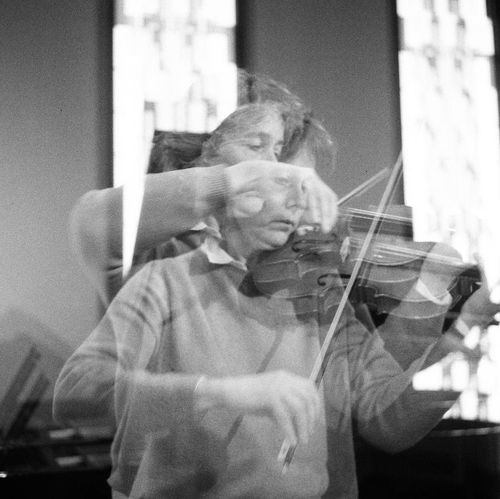
B&W pictures: Jorg Mohaupt
Member concert
Splendor can only be the independent and free hub that it is, thanks to the members who support us. We pay them back with our specialty: music. Every year, all Splendor musicians play one concert that's free for this crucial group to whom Splendor owes its everyday existence. Combined with many other events, this means that our members have free entrance to over 50 concerts a year for €9,99 p/m (and €4,99 p/m for minima and students!) – and receive a discount for all other concerts. Pretty good deal, right?
The members enable Splendor to remain independent, which is the only way to secure real freedom in programming, experimentation, risk-taking and the promotion of young, upcoming artists. If you can think of another place without a central programming, where last-minute concerts can be planned any moment, where there is no backstage and artists and audience are constantly mingling and hanging out at the bar, where mysterious creative outbursts can be presented that are often labeled 'too risky' elsewhere, and that still guarantees high quality by unleashing the best of The Netherlands' music scene in this creative playground – you get a free membership!
Would you rather just visit this concert without becoming a member? You're more than welcome! Buy your ticket(s) below.