Greenland and the New World Order
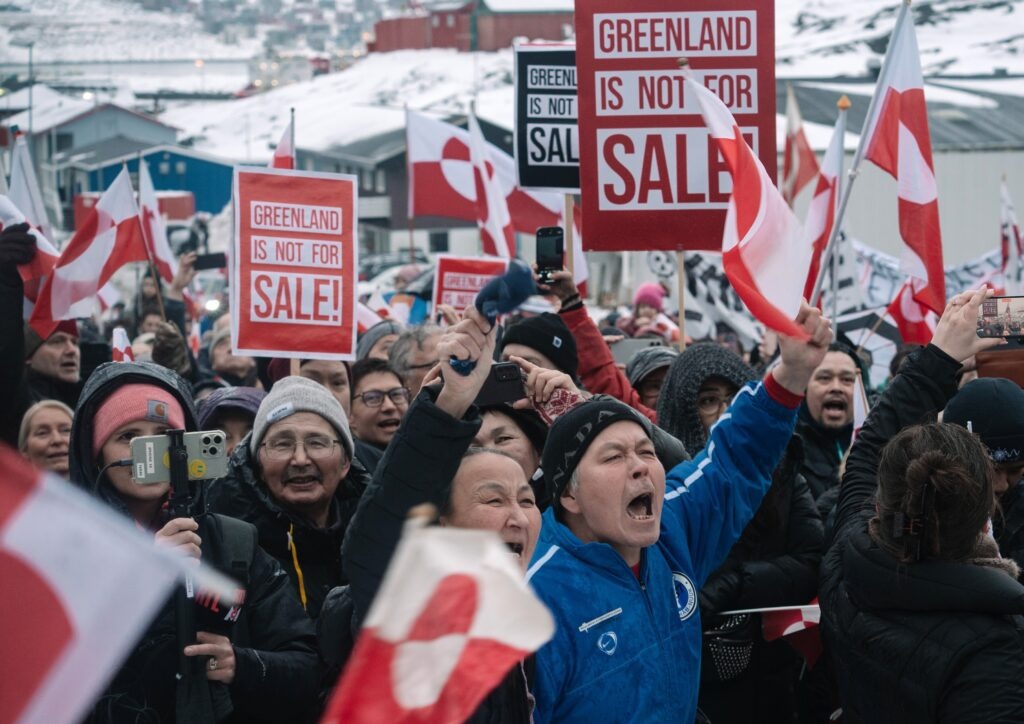
The crisis seems averted, at least for now; Trump is not (yet) annexing Greenland. But the issue could flare up again at any moment and has proven that, as a NATO ally, the United States are no longer a reliable partner. What does this mean for Europe’s security? And what awaits the Greenlanders or Inuit?
‘By fair means or foul,’ President Trump said about wanting to take over Greenland, the autonomous territory that is part of the Kingdom of Denmark. Only to back down – but the bond of trust between the NATO allies had already been damaged. Trump’s antics are forcing Europe, including Greenland, to reflect: what does a Europe without security guarantees from the United States look like? Should we turn our backs on our long-standing ally, and can we afford to do so? Is it time for a European army? And how can Europe support the Greenlanders in their quest for independence so they don’t fall prey to the new imperialism of a major power?
About the speakersNaaja H. Nathanielsen (born 1975) was first elected to the Inatsisartut, the Greenland Parliament, in 2009. She served until 2016, after which she became Director of the Greenland Prison and Probation Service. In April 2021, she was re-elected and was appointed to a ministerial position in the Egede government. She began as Minister of Housing and Infrastructure and Minister of Finance. Her current portfolio in the Nielsen government is Business, Energy, Mineral Resources, Justice, and Gender Equality. Nathanielsen holds master’s degrees in psychology and journalism.
Fatimazhra Belhirch (born 1975) is the spokesperson for defense in the House of Representatives, a lawyer, and a former diplomat with a strong international focus on peace, security, human rights, and the rule of law.
She worked for many years at the Ministry of Foreign Affairs in the fields of foreign policy, human rights, international security, and international cooperation. As a member of the Senate for D66 , she was spokesperson on foreign affairs, foreign trade and development cooperation, and defense, among other matters. She was active in parliamentary diplomacy in both the Senate and the House of Representatives.
Internationally, she is Vice-President of the Bureau for Peace and International Security of the Inter-Parliamentary Union (IPU). She also serves as rapporteur on post-conflict peacebuilding.
She was a member of the Benelux Parliament and serves on the Dutch delegations to the NATO Parliamentary Assembly and the Parliamentary Assembly of the Council of Europe, where she is committed to strengthening collective security, democratic rule of law, and human rights. In addition to her diplomatic and parliamentary work, she has held various administrative and supervisory positions in education, the cultural sector, and civil society, including as the director of the Foundation for Refugee Students UAF.
Karen van Loon is a research fellow at the Clingendael Security and Defence Programme. She specializes in Arctic geopolitics, arms control, and nuclear non-proliferation. Karen was previously a researcher at the Egmont Institute. She has held positions as a teaching assistant in the Political Science Department of KU Leuven Kulak and as a lecturer in the Master of Teaching program at the University of Antwerp.
Reinier van Lanschot (born 1989) is co-founder of Volt Nederland, together with Laurens Dassen, and has been a Member of the European Parliament since 2024. In Brussels, he works on issues related to European defense, the regulation of Big Tech, and European treaty reform. He advocates for the United States of Europe as a strong force on the global stage. He describes this vision in his book Wij Zijn Europa, “We Are Europe.” Before his political career, Van Lanschot worked as a manager at Ahold. He lives in Maastricht with his wife and daughter.