Confronting Genocide Denial: What can we do?
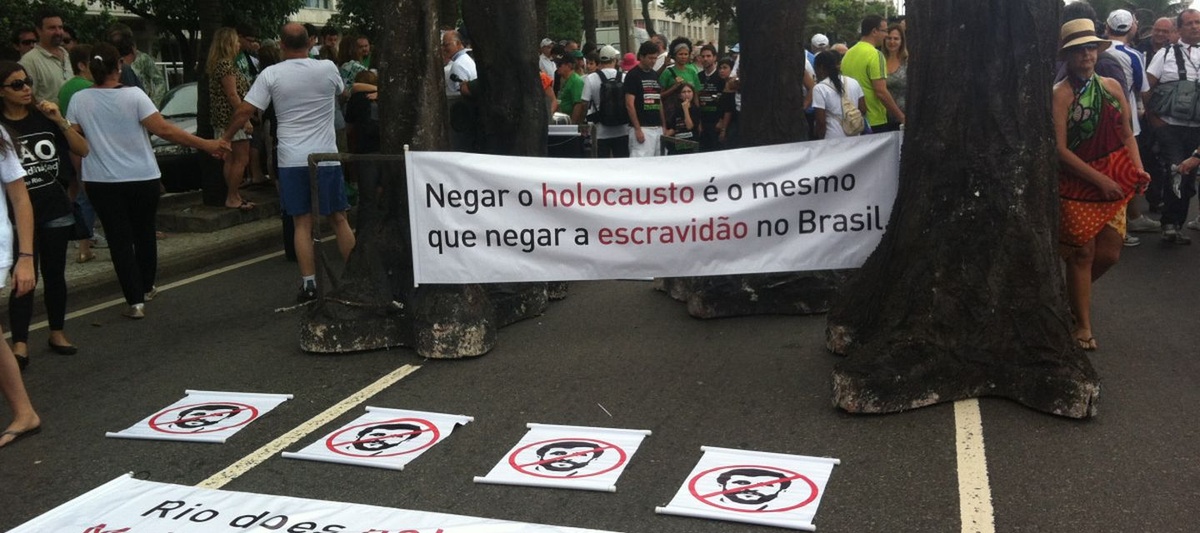
Genocide denial is a persistent and deeply troubling phenomenon that continues to shape how societies remember mass violence. This event explores why denial emerges, how it takes different forms, and why it proves so resilient. Our speakers will examine the mechanisms through which well-documented atrocities are minimized, distorted, or dismissed, and, crucially, how such narratives can be effectively challenged.
At the end of the 20th century, there was strong optimism that genocide could be eradicated, or at the very least made punishable, whereas its denial would be confined to the margins of public discourse. However, a quarter into the 21st century, this optimism has been deeply challenged. Ongoing conflicts in the Middle East, Central Africa, and Eastern Europe have brought immense suffering to civilians, often without proper recognition or accountability, in a global climate where international law is increasingly disregarded and norms are steadily eroded.
As political dynamics have shifted, it is perhaps unsurprising that different forms of genocide denial are moving from the fringes into the mainstream. While denialist narratives continue to circulate through traditional channels, they are now amplified by digital technologies such as social media and AI, expanding their reach and impact. In response to these developments, this event examines different approaches to confronting both longstanding and emerging forms of genocide denial. It also seeks to examine the responsibilities of scholars who study mass atrocities, as well as the ways in which the broader public can actively challenge the harmful dismissal of well-documented instances of extreme human suffering.
Speakers
Uğur Ümit Üngör is Professor of Holocaust and Genocide Studies at the NIOD Institute. His main areas of interest are genocide and mass violence, with a particular focus on the modern and contemporary Middle East. He has published widely on these topics, most recently the monograph Paramilitarism: Mass Violence in the Shadow of the State (Oxford University Press, 2020), Syrian Gulag: Inside Assad’s Prison System 1970-2020 (I.B. Tauris, 2023), and Assad’s Militias and Mass Violence in Syria (Cambridge University Press, 2026).
Assaf S. Bondy is a Sociologist, working as an assistant professor at the University of Bristol Business School and Haifa University. Besides his work on the Gaza genocide, Bondy’s research spans labour relations, democracy and its backsliding, and the political economy of national conflict. A public intellectual, Bondy writes frequently for popular outlets (e.g., Haaretz and Jacobin) and is co-author of The Lexicon of Brutality (with Adam Raz).
Iva Vukušić is an Assistant Professor in International History at Utrecht University, and a Visiting Research Fellow at the Department of War Studies, King’s College London. She studies mass violence and criminal accountability, especially international courts in The Hague. Iva spent a decade working in practice, as a researcher and analyst, at the Special War Crimes Department of the Prosecutor’s Office in Sarajevo, Bosnia and Herzegovina, and at the International Criminal Tribunal for the former Yugoslavia in The Hague. She is a commissioner of the Netherlands Helsinki Committee.
Shahin Nasiri is a lecturer in political philosophy at the University of Amsterdam, with research interests spanning phenomenology, theories of freedom and democracy, migration and citizenship, critical (race) theory, critical genealogy of state violence and political resistance. Shahin’s ongoing research focuses on the legal-philosophical nature of mass political violence and experiences and practices of resistance by which political agents unsettle conditions of violence and unfreedom.
Vladimir Petrovic (moderator) researches mass political violence and strategies of confrontation with its legacy. He completed graduate studies in contemporary history at Belgrade University and comparative history at Central European University. He worked in international and national courts on war prosecuting crimes committed in the former Yugoslavia. He wrote a book about historians and social scientists as expert witnesses in such cases (Clio takes the stand, Routledge 2019). He completed postdoctoral studies in transitional justice at NIOD Institute for War, Holocaust and Genocide Studies, Amsterdam where he currently works.