CiNEMercator - THE HOUR OF THE WOLF (Ingmar Bergman, 1968)
By 1968, Ingmar Bergman had moved well beyond the metaphysical inquiries of The Seventh Seal and Wild Strawberries. Following the radical formal experiments of Persona (1966), his cinema had entered a darker, more psychologically exposed territory. The question of God's silence, once so central to his work, had gradually given way to the more intimate terrors of identity, desire and the human mind turned against itself.
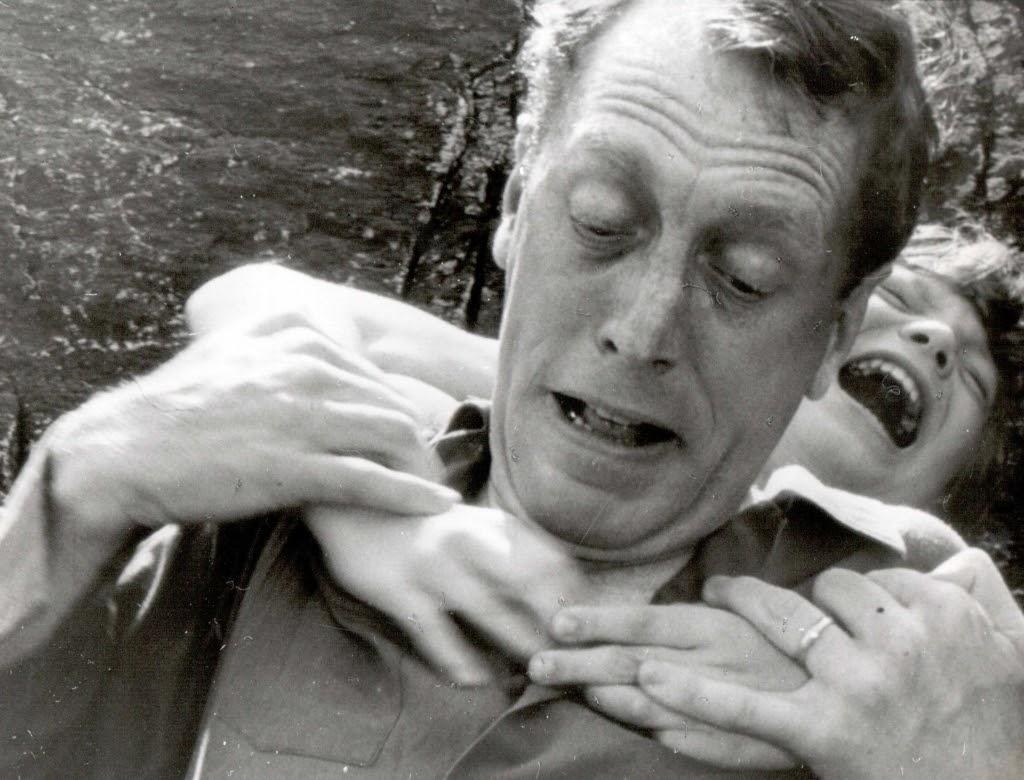
Hour of the Wolf belongs to this particularly feverish period, in which Bergman's lifelong preoccupations with artistic creation, humiliation and emotional dependence began to assume the dimensions of outright horror. Max von Sydow plays Johan Borg, a painter who retreats with his wife Alma, played by Liv Ullmann, to an isolated island. What initially resembles a study of artistic solitude gradually disintegrates into a hallucinatory world of grotesque aristocrats, erotic humiliation and psychological persecution.
There is something almost indecently autobiographical about Hour of the Wolf; Bergman had long been fascinated by the artist as both visionary and emotional tyrant, but here he approaches the subject with unusual cruelty. Johan's suffering is inseparable from his vanity, his need for recognition and his inability to escape the humiliations of his own imagination. Art offers no redemption; if anything, the artist's heightened sensitivity becomes a form of imprisonment.
Made between Persona and Shame, Hour of the Wolf occupies a singular place in Bergman's extraordinary late-1960s period. Less formally austere than the former and less politically grounded than the latter, it is an unruly, occasionally excessive work, whose very imperfections seem bound to its subject. Its horror is not simply that the mind can produce monsters, but that imagination, the source of artistic freedom, may also become an instrument of absolute captivity...
This film is chosen by Lasse