CiNEMERCATOR - SMALL WORLDS 2001
Filmlover,
Merthe Voorhoeve,
Andreas van Riet,
Maaike Hasselaar
& Elisabeth van Vliet,
each are programming 1 precious film per month. That's 4 precious films per month!
CiNEMERCATOR
doors open 19:00
start 20:00
ticket 3€
5-8
Les Blank
Burden of Dreams
(1982)
Burden of Dreams is one of the rare making-of documentaries that completely transcends its original purpose.
On paper it follows Werner Herzog during the disastrous production of Fitzcarraldo; in practice it becomes a film about obsession itself. Les Blank’s camera never sensationalizes the chaos, nor does it try to explain Herzog away. It simply observes a director whose artistic conviction pushes everyone- including himself- to the edge of what seems reasonable.
Yet Burden of Dreams is never merely about filmmaking. It is about the peculiar relationship between ambition and madness, and about the strange places people are willing to go in pursuit of an idea that refuses to let them go. Blank’s calm, unembellished approach gives the film its power: instead of judging Herzog, he lets the contradictions speak for themselves.
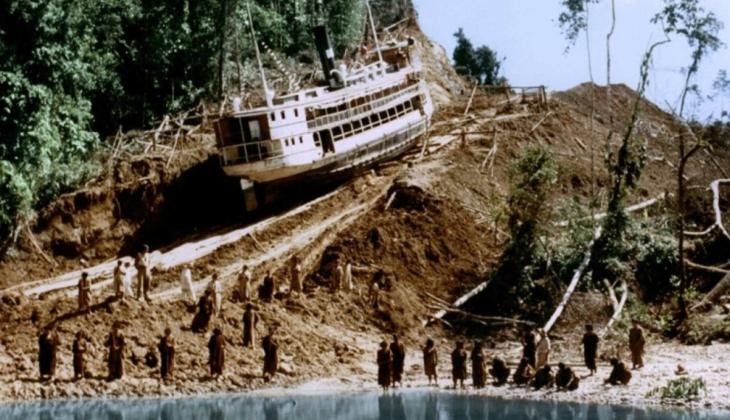
Herzog comes across as visionary, reckless, inspiring and deeply frustrating, often within the same scene. The famous image of hauling a full-sized steamship over a mountain ceases to feel like a metaphor and becomes an uncomfortable reality, forcing the audience to ask whether extraordinary art can ever justify extraordinary human cost.
Seen today, it remains one of cinema’s most fascinating self-portraits, not because it celebrates genius, but because it reveals how thin the line can be between artistic necessity, obsession, and self-destruction. It ultimately enriches Fitzcarraldo, but it stands just as confidently on its own as a documentary about the price of turning an impossible dream into reality...
this film is chosen by Andreas
12-8
David Lynch
A Straight Story
(1999)
The Straight Story is often described as David Lynch’s most normal film, but that can be misleading. It may lack the surreal imagery and narrative puzzles that define much of his work, yet it is unmistakably a Lynch film in its attention to silence, landscape and the quiet mysteries of ordinary life.
Based on the true story of Alvin Straight, an elderly man who drives his lawn mower across several states to reconcile with his estranged brother, the film unfolds at the pace of its protagonist. Lynch never rushes the journey or inflates its emotions. Instead, he finds drama in small encounters; with strangers, memories and the passing American landscape. These moments gradually accumulate into something unexpectedly profound.
What makes The Straight Story so enduring is its faith in simplicity. It suggests that reconciliation doesn’t require grand gestures, only the willingness to begin. Beneath its gentle surface lies a film about aging, regret, dignity, and the fragile ties that bind families together. Lynch approaches these themes with remarkable restraint, allowing the ordinary to become quietly extraordinary.
Rather than feeling like an exception within Lynch’s body of work, The Straight Story reveals another side of the same filmmaker: one equally fascinated by human vulnerability, only this time without the shadows. It is one of the warmest and most compassionate films he ever made, and a reminder that profound cinema doesn’t always need to raise its voice.
This film is chosen by Maaike
Do you want to receive our