CiNEMERCATOR - Guillermo del Toro PAN'S LABYRINTH 2006
Filmlover,
4 cinephiles:
Merthe Voorhoeve, Andreas van Riet,
Maaike Hasselaar & Elisabeth van Vliet,
each are programming 1 precious film per month. That's 4 precious films per month!
CiNEMERCATOR
doors open 19:30
start 20:00
ticket 3€
nxt edition:
14-1
Guillermo del Toro PAN'S LABYRINTH 2006
Pan’s Labyrinth unfolds at the meeting point of fantasy and historical violence, not to offer escape but to ask what inner life can survive under brutality.
Set in post–Civil War Spain, the film follows a child who turns to myth- not as a refuge- but as a parallel language for understanding a world that refuses her safety.
The film is inseparable from the long, patient working method of Guillermo del Toro. Not a single creative gesture, rather the culmination of obsessions, sketches and ideas, developed quietly over many years. Del Toro wrote the screenplay and conceived the fantasy elements not as adaptations of existing myths, but as an original, internally coherent system shaped by fairy-tale logic, Catholic symbolism and moral parable. These structures are notably unsentimental. The fantastical realm operates according to strict rules, demands obedience, and carries real consequences. It does not function as a sanctuary from the historical world but as an ethical testing ground. The tasks imposed on the young protagonist echo the pressures of the adult world she inhabits, reframing myth as a space where moral agency is rehearsed, not escaped into. Childhood is presented as a heightened state of awareness. One that registers injustice sharply, even when it lacks the language to name it. Fantasy becomes a mode of cognition, a way of structuring experience when rational explanation fails- or is denied. With it's s refusal to resolve the relationship between fantasy and reality into allegory or reassurance Pan's Labyrinth treats imagination not as consolation, but as a disciplined inner practice; a means of preserving moral orientation when external structures have collapsed.
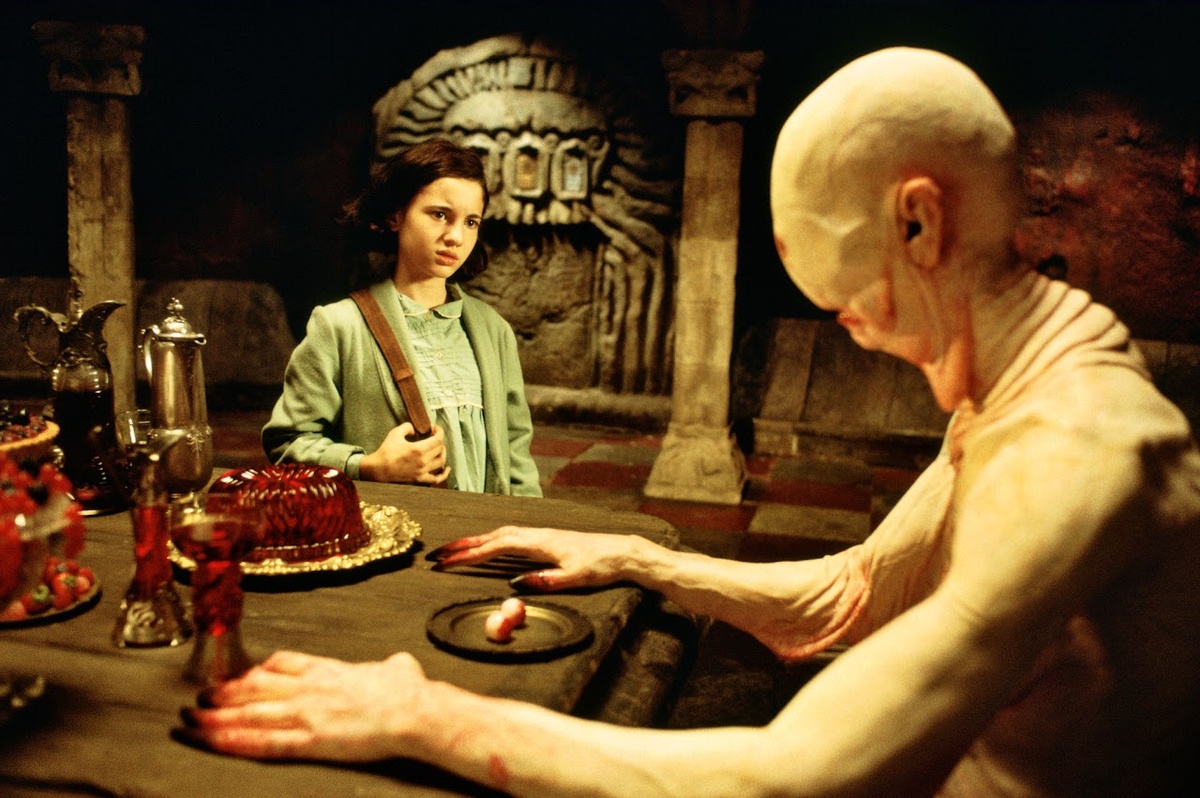
What distinguishes the film’s production is the degree of authorial control Del Toro insisted upon. At a moment when fantasy cinema was increasingly dominated by digital spectacle, Pan’s Labyrinth was built around material presence: hand-designed creatures, practical effects, textured sets and carefully controlled lighting. This choice gives the film its particular gravity; he creatures occupy space, cast shadows, and age alongside the human world.
The film’s lasting force comes not from invention alone, but from the care with which invention is constrained, shaped by history, craft and an insistence that imagination- like ethics- must be practiced to it's limits.
Merthes' choice
🫀
Do you want to receive our