Black Box Iran – With Nilo Tabrizy & Fatemeh Jamalpour
How do you report on a closed dictatorship with an oppressed yet defiant population? Journalist Nilo Tabrizy is an open-source investigative reporter who covers Iran.
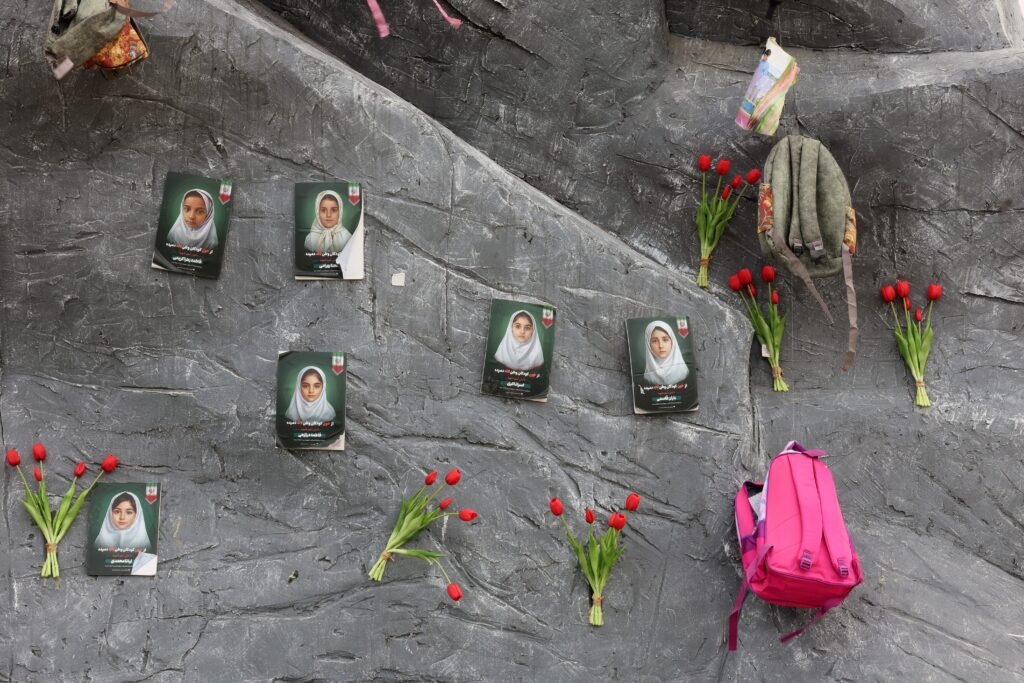
For Western media, it is almost impossible to provide an accurate picture of what is happening in Iran. One of the most reliable methods to do so is through open-source reporting, which uses publicly available data to reconstruct events and verify facts. Nilo Tabrizy previously did this work for The New York Times and The Washington Post. Among other investigations, she reported on the missile strike on an Iranian girls’ school at the start of the war, in which about 165 students were killed. She recently received an Emmy for a documentary in collaboration with Bellingcat investigating the impact of the air strikes on the Iranian nuclear programme. How do you conduct data-driven investigations in a country notorious for internet blackouts?
Earlier, Tabrizy covered the Woman, Life, Freedom movement demonstrations that erupted in Iran in 2022 after the death of Mahsa Jîna Amini. About these events, Tabrizy co-wrote the book For the Sun After Long Nights with Fatemeh Jamalpour, who is an Iranian feminist journalist, author, and former newspaper reporter. She is known for her reporting on women’s rights, human rights, and social issues in Iran. She previously worked for the reformist Iranian newspaper Shargh and later contributed to international outlets including BBC World News, The Sunday Times, The Paris Review, and Los Angeles Times.
The Dutch translation of their book, Zusters in Iran (Zwartjes & Labovic), was recently published. In conversation with Tabrizy and Jamalpour, we discuss the ongoing war in Iran, the recent round of protests in the country and what it means to report on a country that both journalists fled.