Between Landscapes and Violence: The Role of Our Ecosystems in Conflict
Today, the world is home to more than 130 armed conflicts. Roughly a quarter of the world’s population live in conflict afflicted zones, which cover approximately 10 percent of the Earth’s landmass. Conflict, war, and genocide are often seen as something deeply or uniquely human; however, we are just one species in the intricate network of ecosystems that make our planet home. At times, our conflicts are caused by the landscapes around us. Often, our conflicts shape them.
This panel talk aims to strip away the purely anthropocentric lens typically applied to conflict studies to place (nonhuman) nature at the center of the discussion. Instead of perceiving natural environments as a background character in our human saga, this panel sheds light on the multidimensional role they play in armed conflict. Together with Judith Verweijen of Utrecht University, who teaches and conducts research in political geography, political ecology and conflict studies, Kateryna Kurakina, who worked for Rewilding Ukraine, and the director of Pro-Palestine NGO Plant een Olijfboom, Esther van der Most, we will ask, first, how nature can be the cause of conflict. Second, how nature can be conserved during times of widespread violence. Third, how conserving landscapes can serve as a site of resistance. Together, these perspectives will help us understand conflict not only as a human affliction, but as a truly global phenomenon.
Speakers
Judith Verweijen is an Assistant Professor in the Department of Human Geography and Spatial Planning at Utrecht University. Her research lies at the intersection of conflict studies, political ecology and political geography. Her work focuses on militarization and the interaction between the dynamics of violence, armed mobilization, and environmental and climate change. Her focus is on Central Africa, particularly eastern Democratic Republic of Congo, where she has been conducting intermittent fieldwork since 2010.
Kateryna Kurakina is a Ukrainian conservation communications professional with nearly 20 years of experience working with international environmental organisations, including WWF, Rewilding Ukraine and Rewilding Europe. Her work has focused on biodiversity conservation, ecosystem restoration, and engaging communities and stakeholders in rewilding and nature across Ukraine and Europe. Through her involvement with Rewilding Ukraine, she has gained valuable insights into how Russia’s war against Ukraine affects ecosystems, conservation efforts, and local communities.
Esther van der Most is the director of the Dutch foundation Plant een Olijfboom (Plant an Olive Tree) who works in Palestine and raises awareness in The Netherlands. More than 300,000 olive trees have been planted in the occupied Palestinian West Bank by the organization. Olive trees play an important role in Palestinian culture, as well as in the resistance against land colonization by the Israeli regime—which continues to seize increasing amounts of land to expand settlements that are illegal under international law.
Babette Okhuysen (moderator) is an editorial member of SPUI25 in Spe. Today, she has a bachelor’s degree in Interdisciplinary Social Sciences and plans to pursue a master’s in social studies as well. During her bachelor’s, she focused on conflict, non-human perspectives and gender inequality. Throughout her academic years, she has increasingly developed a decolonial lens on her work, through which she examines how Western colonial ideas and systems continue to profoundly influence people and the world around us. She is also interested in nature conservation, cultural dynamics and indigenous rights.
Else Lanjouw (moderator) is an editorial member of SPUI25 in Spe. I have always been fascinated by the versatility of human beings. We can show so much love and compassion, and at the same time so much cruelty and neglect. For this reason, I studied Political Science at the University of Amsterdam, after which I completed a master’s degree in Global Conflict in the Modern Era in Leiden. My interest continues to lie in humanizing political science issues. How can we maintain empathy in dehumanizing situations, such as conflict and forced displacement? At SPUI25 in Spe, I hope to explore the different sides of human behavior and thus discover ways to combat dehumanization and violence.
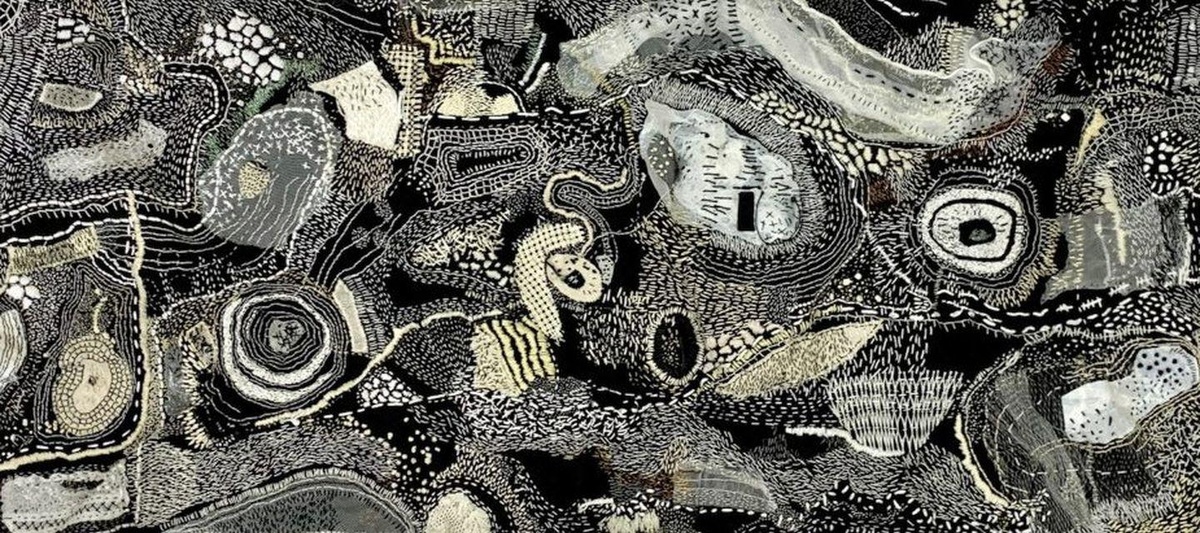
Shereen Quttaineh is a textile artist and art educator whose work explores botany, land, political control, and everyday rituals as sites of collective memory. Based in Amman, her practice is rooted in contemporary textile art and printing, employing reclaimed materials as both medium and archive. Through relief printing, textile collage, and embroidery, Quttaineh investigates the expressive and conceptual potential of textiles. Her work unfolds as a meditative and reflective practice, engaging with the tensions between personal introspection, collective memory, and socio-cultural narratives.