Art Workers’ Assembly: Cross-sectoral solidarities
Framer Framed and Platform BK collectively present a public programme bringing together Dutch-led initiatives and European-based sustained campaigns that have shaped recent practices of cultural solidarity. This event is realised in the context of the exhibition Life After Love curated by Hera Chan and Edwin Nasr.
Drawing on examples including the historic May 8 Strike at the 61st Venice Biennale (2026), Platform BK’s Mapping Solidarity for Palestine, the Collective Refusal Campaign Against Artwashing in Rotterdam, the Cultural Boycott Campaign, and the work of local cultural workers and trade unionists, the programme asks what collective organising can look like across cultural and social sectors.
How can artists become involved in cross-sectoral organising, connecting with the struggles of trade unions, action groups, and neighbourhood initiatives? What role can artists play amid austerity measures and widespread social and economic upheaval?
Across the programme, artists, organisers, cultural workers, and others come together to exchange strategies for visual representation and agitation, organising tactics, future campaigns and possible solidarities across different contexts.
Programme
Saturday 21 November 11:00–14:00. Register here.
11:00–12:00
This session invites organisers who were involved during the May 8 Venice Biennale Strike to share their experiences bringing together different union groups and cultural workers to call for a boycott against the genocide in Gaza.
12:15 – 13:15
This session specifically addresses the use visual representation in workers’ struggles, and the way an art practice can be built around solidarity with workers.
Sunday 22 November 11:00–17:00. Please email solidarity@platformbk.nl if you are part of a grassroots organising initiative or workers’ association and want to join.
The programme sets the scene for cultural workers organising in the Netherlands, what campaigns are active, and reflections on actions. In addition to learning from other unions and struggles to give context on how they have escalated their strikes, what it looked like organising.
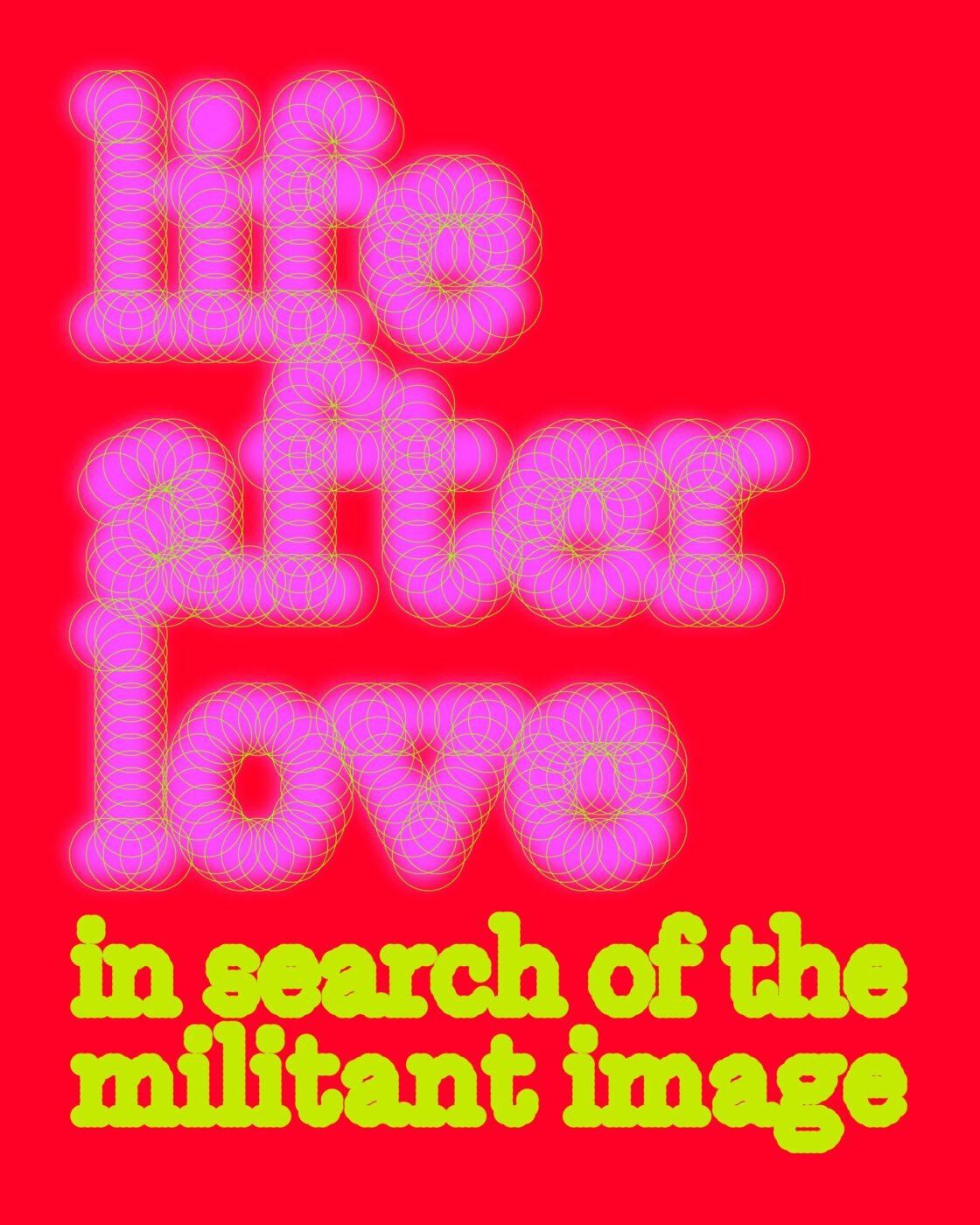
The exhibition Life After Love asks what the changing forms of political struggle reveal about the changing forms of image-making. If the militant image of the twentieth century emerged alongside mass party politics, anti-colonial liberation movements and the project of revolutionary cinema, what becomes of that tradition within a conjuncture shaped by digital platforms, algorithmic circulation and decentralised forms of political organising?
The exhibition approaches the militant image as a historical category, which has always depended upon particular forms of mediation. Earlier traditions of militant image-making were sustained by formations capable of producing and circulating images in the name of a collective political subject. Their ambitions were inseparable from the infrastructures through which they moved and the revolutionary horizons they sought to cultivate.
Contemporary uprisings unfold under markedly different terms. Images now circulate across encrypted messaging applications, social media feeds and informal digital networks whose logics reshape our visibility and attention. Often produced by those embedded within the events themselves, they move rapidly between testimony, tactical communication and affective expression. Their aesthetic form bears the imprint of the political moment from which they emerge: anonymity, spontaneity and opacity become qualities inscribed within the images.
Rather than asking whether the militant image survives in the present, the exhibition Life After Love (2026) asks how its political function has been transformed, and what this transformation discloses about the actuality of struggle. The works assembled here reflect upon the conditions through which images are produced, circulated, appropriated and contested. Many emerge from practices situated alongside political organising, mutual aid and community work, where cultural production unfolds in close proximity to lived struggle and the imperative of internationalist solidarity. Taken together, they invite viewers to consider the militant image in the present tense and the forms through which emancipatory futures become thinkable.
Info & Credits
This event is in English. Admission is free, pay what you can.
Do you also think art should be free and accessible? Please consider supporting us with a donation when registering or by becoming a Framer Framed Friend! This event may be photographed and filmed. Kindly let us know in advance if you prefer not to have your picture taken. For seated programmes, places are always made available for wheelchair users. Please speak to the host before the programme begins.
Life After Love: In Search of the Militant Image is curated by Hera Chan and Edwin Nasr and on show at Framer Framed until 17 January 2027.
Framer Framed is supported by the Ministry of Education, Culture and Science; Amsterdam Fund for the Arts; and Municipality of Amsterdam.
Location
Framer Framed
Oranje-Vrijstaatkade 71
1093KS, Amsterdam