Remembrance and Resistance: Whose Public Art?
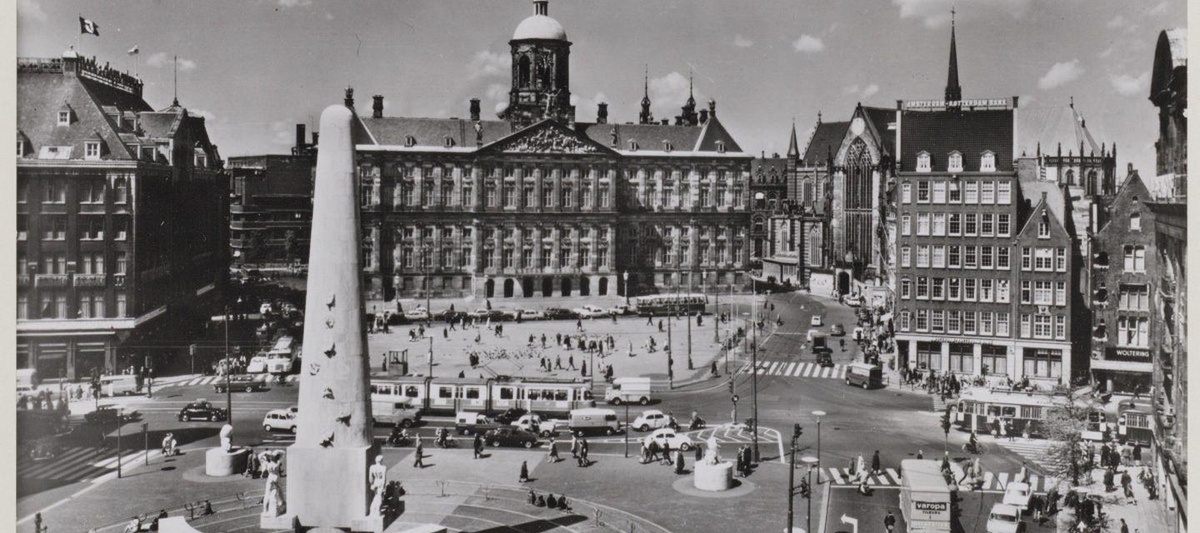
Who and what gets to be remembered, and who gets to decide? Monuments and public art are rarely neutral. They can spark controversy, quietly disappear from public view, or become focal points for broader debates about identity, history, and who gets to represent the city. What stories should public art tell, whose histories and experiences should they represent, and how can they reflect a city shaped by its past, present, and possible futures?
The Amsterdam municipality has recently proposed a new policy framework for art in public space, aiming to create more room for representation and multiple perspectives. The framework seeks to encourage public art that commemorates and imagines the histories and experiences of people with a migration background, LGBTQI+ people, and women. It responds in part to Motion 839, adopted by the Amsterdam City Council in 2020 amid growing public debate about racism, colonial legacies, and representation, fuelled by the Black Lives Matter protests following the murder of George Floyd.
But what do representation and polyphony mean in practice? Who determines which stories deserve a place in public space, and how can different communities participate in shaping the city’s commemorative landscape? What role should the municipality play, and what possibilities exist for civic initiatives and artistic interventions beyond formal policy and institutional frameworks?
Taking the recently published book You Are Here — Art in the Public Space of Amsterdam as a starting point, the evening will explore these questions through the perspectives of art, history, political science, and public engagement. Through a collaboration between Stadscuratorium Amsterdam and journalist Edo Dijksterhuis, the book examines the monuments, statues, murals, and memorials that shape the city around us, often without us really noticing them.
Speakers
Annemarie de Wildt is an independent researcher. She will give an introduction to Amsterdam’s monument landscape, the municipality’s new policy framework, and Motion 839, placing current debates in a broader historical and international context.
Floris Vermeulen is professor of Political Science and will reflect on civic engagement and representation, examining civic participation, local democracy, and the broader question of whose voices are represented in Amsterdam’s public space.
Laura van Hasselt is professor of History and will reflect on monuments, migration, and historical memory. She will take into account monuments in Amsterdam and Europe, including the initiative for a guest-worker monument in Amsterdam-Noord, and considers how historical narratives become part of public space.
Raul Balai is a visual artist and designer. He will challenge historical narratives drawing on his artistic practice and multicultural background, as well as influences from graffiti, hip-hop, and graphic design, to explore how art can challenge stereotypes, historical representations, and social prejudices with criticality and humor.
Ilga Minjon (moderator) is a member of Stadscuratorium Amsterdam, with expertise in the themes addressed during the evening.