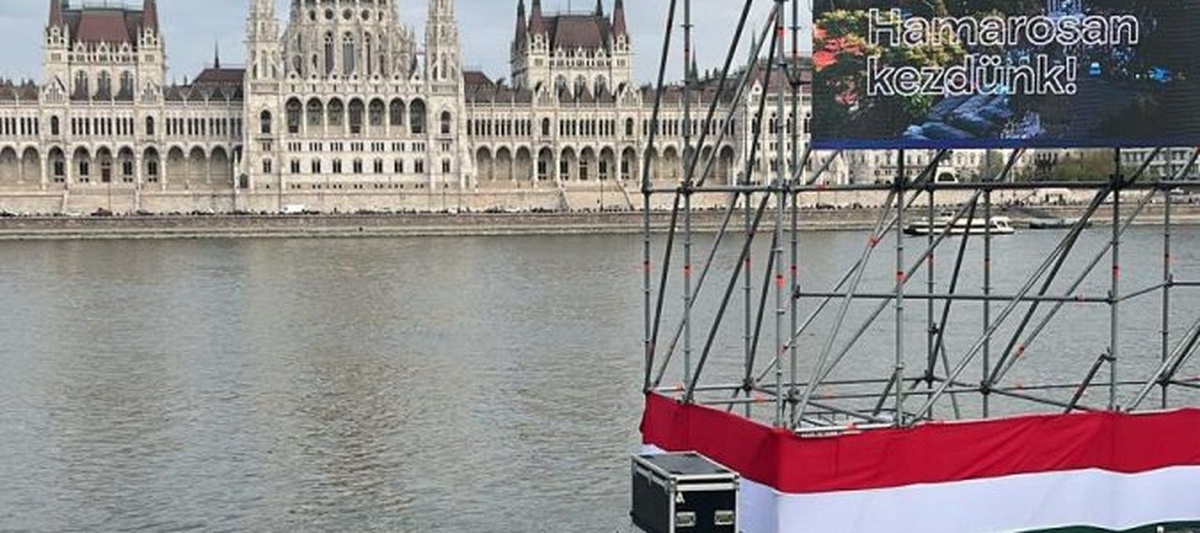
Hungarian Elections: What Do They Mean for Europe and the Netherlands?
Just four days after the Hungarian elections, we take stock of what the election results could mean for Europe, and the Netherlands. These are among the most closely watched elections of the year, with widespread attention on how Hungarians vote and whether the elections are free and fair. What does the outcome mean for Europe and the Netherlands?
Over the past sixteen years, Hungary has transitioned into what is often described as an “electoral autocracy” under Prime Minister Viktor Orbán and his Fidesz party, characterized by democratic backsliding: the systematic and ostensibly “legal” dismantling of institutional checks and balances.
This process has been achieved through three main mechanisms: electoral engineering, media control, and legislative capture.
Elections continue to take place but are increasingly unfair, heavily favouring the ruling Fidesz party. Since 2010, Fidesz has consolidated power through media capture, systemic gerrymandering, and changes to electoral laws, while formally maintaining electoral legitimacy.
The Hungarian elections is considered a watershed moment for the country’s democratic trajectory. For the first time in sixteen years, Prime Minister Viktor Orbán faces a significant challenge from Péter Magyar’s TISZA party, presenting a critical choice between continued autocratisation and potential democratic renewal.
The outcome is likely to have far-reaching implications beyond Hungary.It may infleunce the European Union’s geopolitical unity, its response to Russia’s aggression against Ukraine, its internal adherence to the rule of law, and the broader development of right-wing populism across the continent.
In this event, we aim to disentangle the immediate and long-term implications of the outcome and reflect on its potential impact beyond Hungary’s borders.
Speakers
Carolien van Ham is Professor of Empirical Political Science at Radboud University Nijmegen. Her research focuses on democratisation and autocratisation, legitimacy and democratic erosion, and electoral integrity and electoral fraud.
Theresa Kuhn is Full Professor at the Capacity group European Studies, University of Amsterdam and academic director of the Amsterdam Center of European Studies (ACES). Using survey research and experimental methods, she studies how citizens react to globalization and European integration in their political attitudes and collective identities.
Zsuzsanna Végh is a program officer at the German Marshall Fund of the United States. Her analytical focus is on Central and Eastern Europe, especially the foreign and EU policies of the Visegrád countries, the state of democracy, and the role and impact of the populist radical right in the region.
Jesse Pinster is journalist at Follow the Money. He writes about the European Union as part of FTM’s Brussels bureau and seeks to understand who pulls the strings in the corridors of European institutions and what consequences this has for the EU’s 450 million inhabitants. Jesse investigates climate and energy policy, anti-democratic forces within the EU and wishful thinking by European institutes.
Kati Cseres (moderator) is an Associate Professor of Law at the Amsterdam Centre for European Law and Governance (ACELG) and Theme leader ‘The Future of European Democracy’ of the Amsterdam Centre for European Studies (ACES). Her research focuses on EU economic law as a tool at the intersection of markets, law, and democracy, examining its constitutional significance and limits at both EU and national levels.