FREEDOM
Tonight’s program traces a journey through the musical landscapes of Latvia, Czechia, and Russia. Despite their stylistic differences, all three composers share a Tonight’s program journeys through the musical landscapes of Latvia, Czechia, and Russia, where Vasks, Janáček, and Shostakovich use chamber music as a vessel for truth, resilience, and emotional survival.
From stillness to fire to structure, their music reveals freedom not as a political state, but as a spiritual discipline: in The Fruit of Silence, the freedom of peace; in the Violin Sonata, the freedom of truth; and in the Piano Quintet, the freedom of memory.
Presented on May 5th for Liberation Day, these three dimensions of Freedom reflects on the inner cost of peace — and is "a musical reminder that maintaining our freedom starts with the hope and discipline we cultivate within ourselves."
The Silence of Pēteris Vasks (b. 1946)
We begin in total tranquility. Translated from its original choral setting into a wordless instrumental meditation, Vasks’s The Fruit of Silence acts as an introit to the evening. Vasks is a composer who treats music as "food for the soul," using simple, elongated harmonies and glistening arpeggios to physicalize the concepts of peace and prayer. It is a work of horizontal time—unhurried, luminous, and pure. Described by the composer as a “very silent meditation”, The Fruit of Silence takes the five lines of text from Mother Teresa and imagines them in the modern day. Vasks uses his own unique point of view to create a hauntingly beautiful atmosphere that slowly develops over the course of the piece.
The fruit of silence is prayer.
The fruit of prayer is faith.
The fruit of faith is love.
The fruit of love is service.
The fruit of service is peace.
"My music is a message of light and a reminder of the fragility of our world... to be free is to be able to love.”
The Visceral Speech: Leoš Janáček (1854–1928)
From the quietude of Vasks, we are thrust into the feverish, fragmented world of Leoš Janáček. Janáček began writing his Violin Sonata in 1914 as Russian troops approached his Moravian homeland during World War I. Janáček was famous for his use of speech-melody—short, abrupt musical motifs that mimic the inflections of human speech and nature.
The sonata does not unfold in a predictable, classical narrative. Instead, it feels like a cinematic mosaic of clips. It features sudden outbursts, sharp interruptions, and moments of heartbreaking lyricism (as heard in the second movement, Ballada). The finale (Adagio) ends not with a triumphant resolution, but with a quiet, tragic resignation—leaving the stage set for Shostakovich.
"I write because I must. I want my music to be a scream of life, not a polite bow to the past."
The Architectural Weight: Dmitri Shostakovich (1906–1975)
Where Vasks gives us a prayer and Janáček gives us speech, Shostakovich gives us a cathedral. Composed in 1940, the Piano Quintet in G minor was an immediate public triumph in Moscow. Shostakovich looked backward to the Baroque forms of Bach (such as the opening Prelude and Fugue) to find order in a chaotic Soviet world.
The connection to Janáček and Vasks lies in the slow movements. Shostakovich’s Fugue and Intermezzo contain an unhurried, agonizingly beautiful linear counterpoint. Like Vasks, Shostakovich knows how to sustain tension over a single, quiet drone. Like Janáček, he knows the heavy psychological weight of a melody played alone in the dark. By the time the rustic, circus-like Finale arrives, we have survived a massive emotional gauntlet—finding a fragile, earthly joy.
"The majority of my symphonies are tombstones. Too many of our people died and were buried in places unknown... I want my music to remember them."
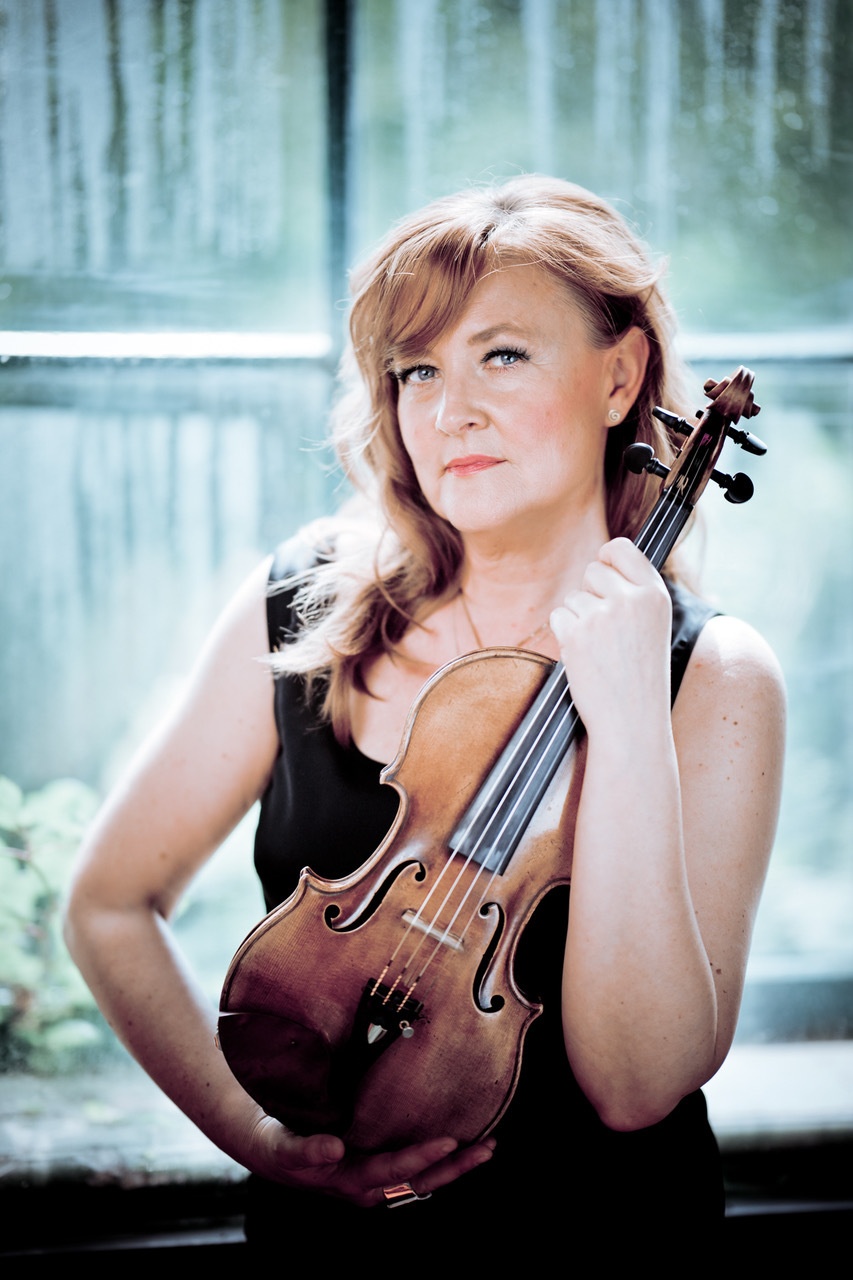
Julija Hartig - violin
Reineke Broekhans - piano
Filipe Fernandes - violin
Teresa Caleiro - viola
Maja Bogdanović - cello
PLEASE TAKE NOTE: This concert will take place in de Uilenburgersjoel - Nieuwe Uilenburgerstraat 91
Photo credits:
Maja Bogdanovic by Marija Cerovic
Julija Hartig by Simon van Boxtel
Filipe Fernandes by Georgina Albreu
Reineke Broekhans by Jostijn Lightvoet